

General SEO
Choosing the right digital intelligence platform has never mattered more.
As search grows increasingly competitive and AI reshapes how marketers work, tools like Similarweb and Ahrefs have expanded far beyond traditional keyword research. Today, both platforms promise deeper insights, smarter automation, and AI-enhanced workflows that help teams move faster and make better decisions.
In this post, we’ll break down how Similarweb and Ahrefs compare across two critical dimensions:
By the end, you’ll have a clear sense of which platform best fits your goals, whether you’re focused on high-level competitive intelligence, hands-on SEO execution, or leveraging AI to do more with less.
Similarweb offers some of the industry’s most robust GEO tools, which help search marketers increase their brand visibility and traffic in Gen AI, as well as plan their SEO content.
The toolset is divided into three parts:
The AI Brand Visibility tool gives you a clear picture of how your brand appears across Generative AI outputs and conversations. It helps you track visibility for the topics that matter most to your business, identify competitive gaps, and uncover opportunities to strengthen your brand presence in the Gen AI landscape.
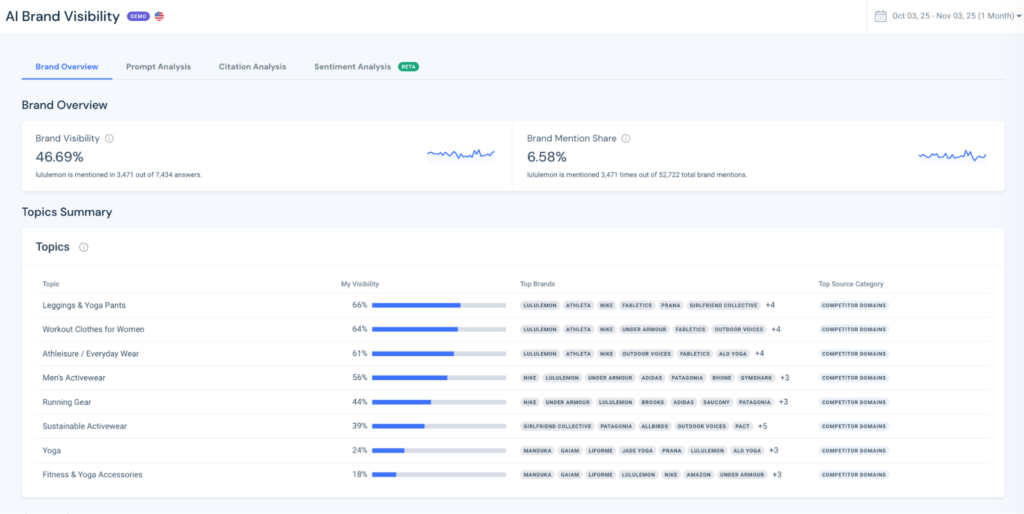
With AI Brand Visibility, Similarweb provides a sophisticated, multi-dimensional view of brand visibility in AI-powered search environments. Key features include:
The AI Traffic Tracker in Similarweb’s Gen AI suite helps marketers and analysts understand how Generative AI platforms are shaping website performance. It provides a comprehensive view of AI-driven traffic patterns across almost any website, revealing which sites benefit most from Gen AI exposure.
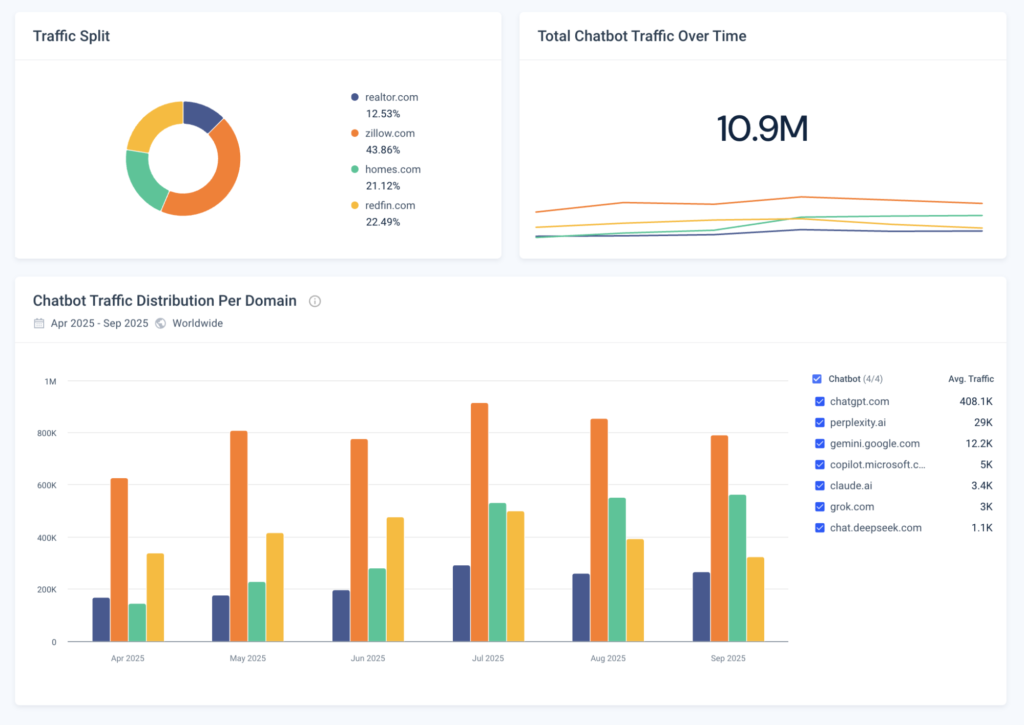
The AI Traffic feature includes:
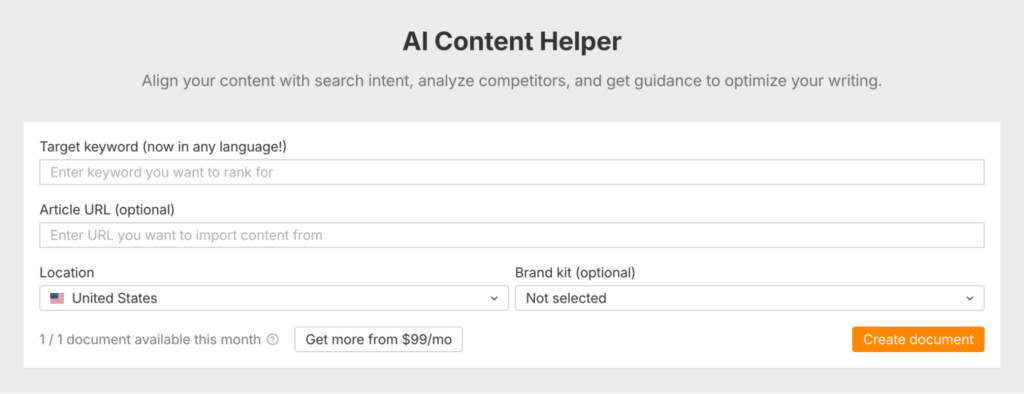
The AI SEO Strategist Agent is designed to turn a simple keyword list into a full, actionable content strategy, helping you dominate the SERPs with data-driven insights.
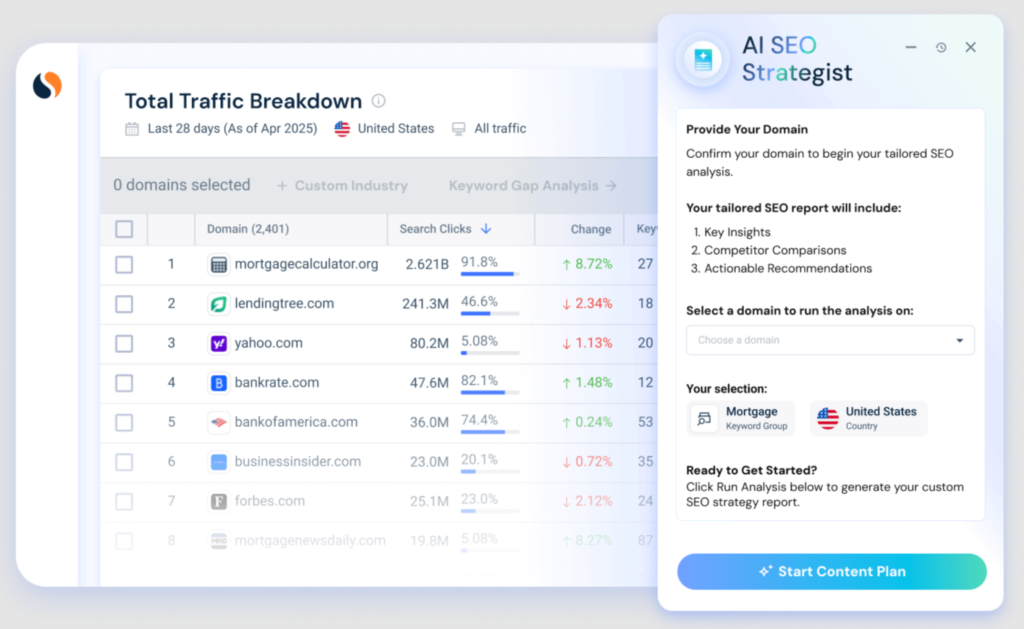
With this tool, you can:
Ahrefs’ AI features are built directly into its core toolkit, helping users write content, understand search intent, and automate technical SEO tasks. Below is a breakdown of Ahrefs’ key AI tools and what they do.
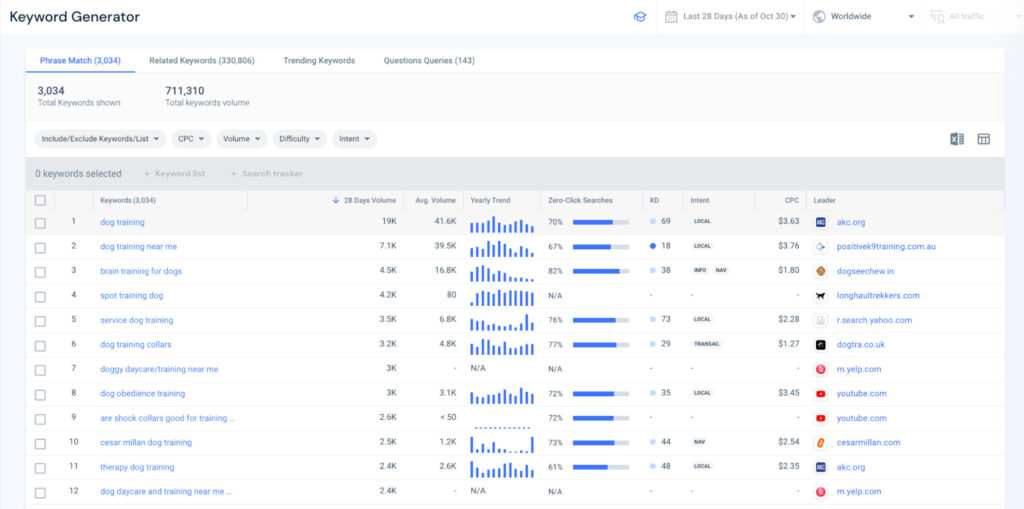
Similarweb’s keyword research tool gives you fresh, accurate insights drawn from real user data from the last 28 days, so you can spot emerging trends and opportunities in real time.
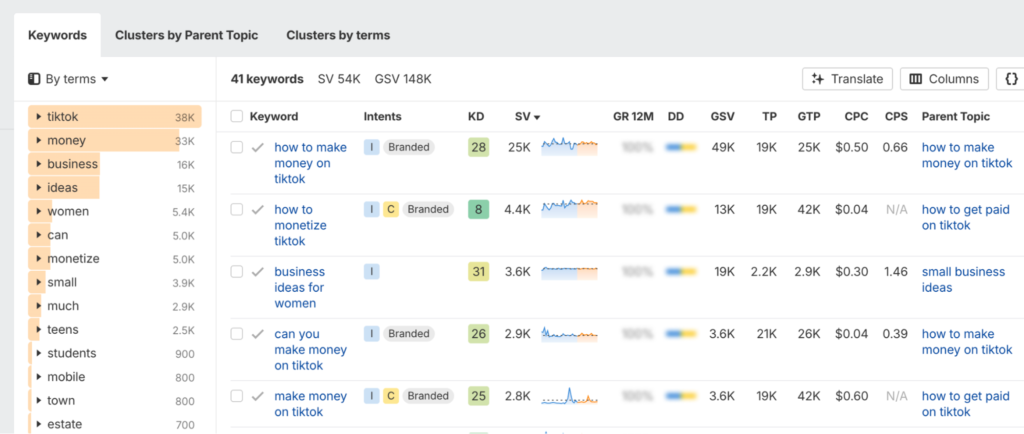
Ahrefs’ keyword research toolkit is one of the most established in the SEO space, offering deep insights across search engines and competitive landscapes. Its Keywords Explorer lets you research billions of keywords across Google, YouTube, Amazon, and Bing, complete with metrics like search volume, keyword difficulty, and clicks to help you prioritize opportunities.
You can uncover content gaps by comparing your site’s performance to competitors, identify keyword trends and SERP features, and track ranking keywords over time through Site Explorer and Rank Tracker.
Ahrefs also incorporates AI-driven keyword insights, including automatic search intent classification and keyword suggestions to expand your targeting and localization options.
Together, these features give marketers a detailed picture of how audiences search, what competitors rank for, and where new keyword opportunities lie.
The Rank Tracker in Similarweb is built to help you monitor your core organic keywords daily, understand and respond to SERP shifts, and keep a competitive edge.
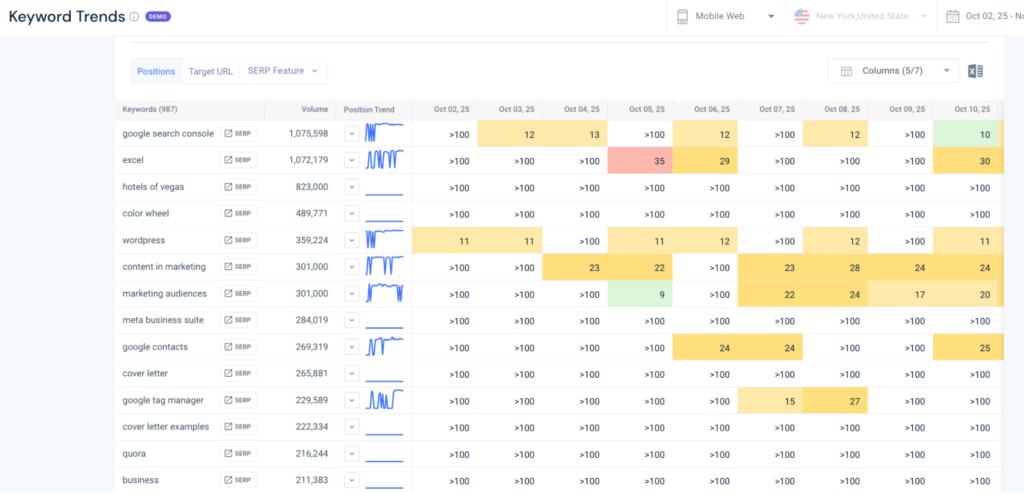
Key features include:
Ahrefs’ Rank Tracker gives you precise, daily updates on how your site performs for key keywords across both desktop and mobile in over 190 countries.
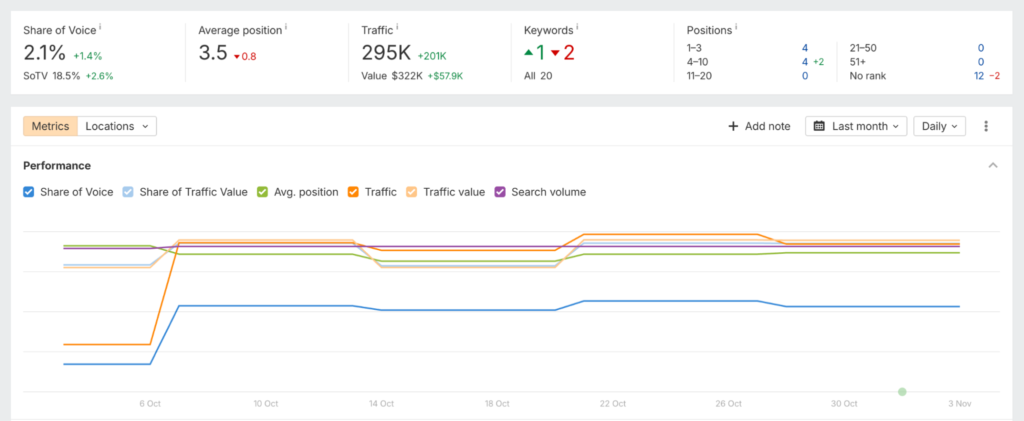
It tracks your average position, visibility trends, and share of voice, helping you monitor progress and identify ranking shifts as they happen.
The tool also highlights SERP features such as featured snippets, image packs, and other rich results so you can see where competitors are capturing attention and where new opportunities lie.
Within the Rank Tracker, you can compare your performance against competitors, tracking who’s gaining visibility and which keywords are driving their traffic. The integrated dashboard makes it easy to oversee multiple projects or domains from one place, offering a clear snapshot of your SEO performance.
Together, these capabilities make Ahrefs’ Rank Tracker a reliable tool for staying on top of ranking changes, spotting competitive movements, and prioritizing keywords that drive measurable growth.
The Site Audit tool from Similarweb is designed to give you a complete snapshot of your website’s technical SEO health and to help you act on issues before they hurt visibility or traffic.
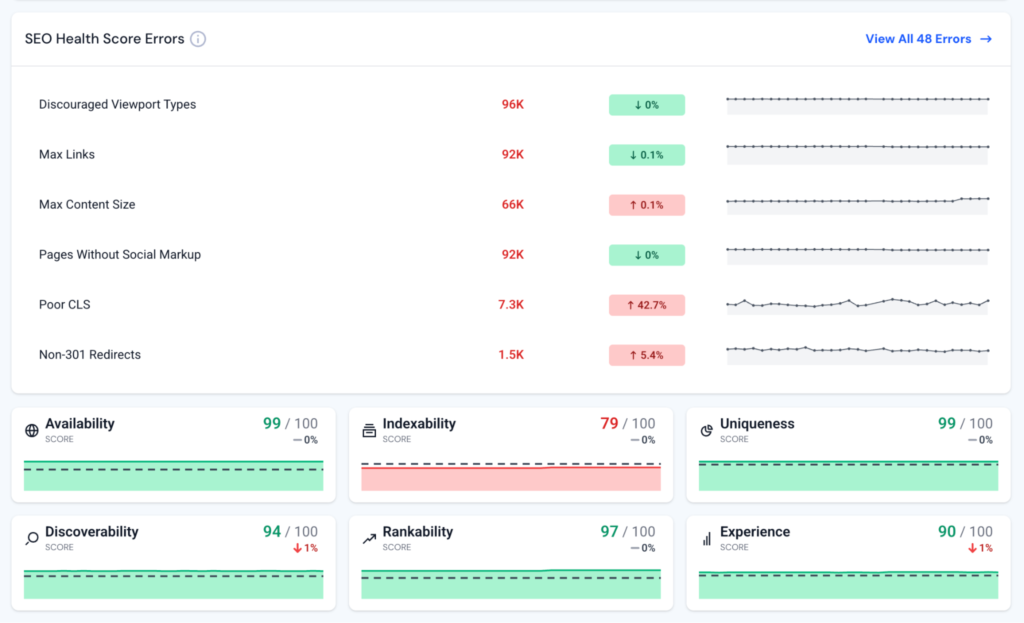
With the Site Audit tool, you can:
Ahrefs’ Site Audit tool gives you a complete technical overview of your website’s SEO health, scanning for more than 170 potential issues across performance, on-page elements, and indexability.
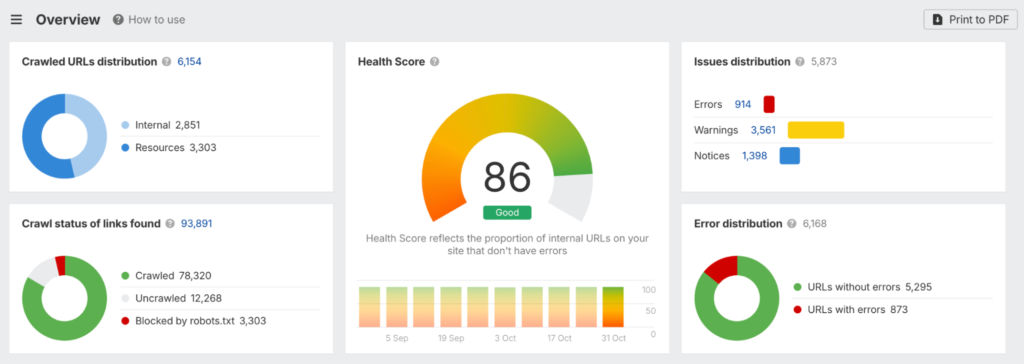
Each crawl provides a clear health score, along with a breakdown of errors, warnings, and notices, helping you prioritize fixes that will have the biggest impact. You can also segment audits by subdomain, folder, or URL group to focus on specific site sections.
The tool tracks Core Web Vitals, page speed, and mobile optimization, while its historical crawl comparisons make it easy to see how your site’s technical performance improves over time.
Ahrefs also benchmarks your site health against competitors, allowing you to spot where others may be gaining an edge and ensure your site remains technically sound and competitive in search.
Similarweb’s Backlink Analysis tool gives you a complete view of your site’s link profile, showing both the quantity and quality of backlinks over time.
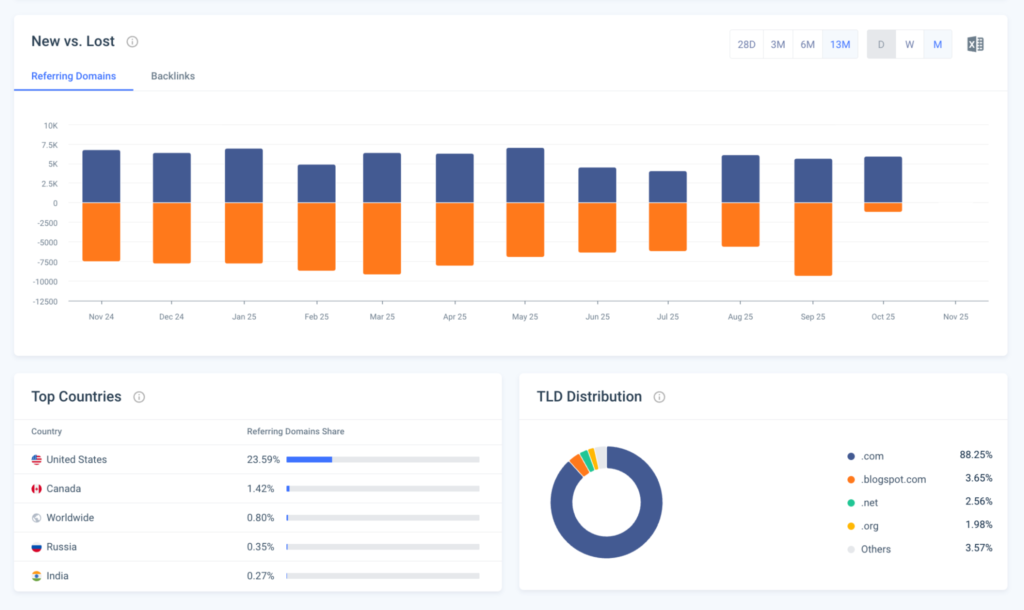
With clean visualizations and historical tracking, you can quickly see where links are gained or lost and explore the full profile behind each backlink. The tool helps you identify top-performing pages earning high-quality links and uncover authoritative domains worth targeting for future link-building efforts.
By combining link quality metrics with competitor insights, Similarweb makes it easy to refine your SEO strategy and focus on the backlinks that truly drive performance.
Ahrefs’ Backlink Analysis tools are among the most recognized in the SEO industry, providing one of the largest and most frequently updated link databases.
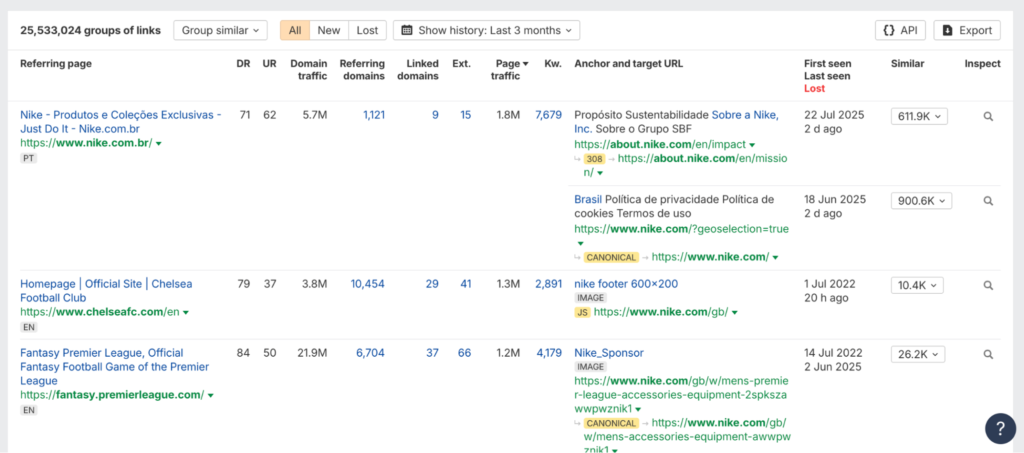
With the Backlink Checker, you can explore any domain’s full link profile including the total number of backlinks, referring domains, anchor texts, and link types along with clear visualizations that show link growth or loss over time.
The Link Intersect feature helps you discover domains that link to your competitors but not to you, revealing powerful outreach and acquisition opportunities. Ahrefs also tracks new and lost backlinks, so you can monitor how your link profile evolves and act quickly when valuable links disappear.
You can go deeper with referring domain and top-linked pages reports, identifying which pages attract the highest-quality links and contribute most to your authority.
Together, these tools give you a clear understanding of your backlink landscape, helping you analyze competitors, build stronger link strategies, and grow your site’s authority with confidence.
When comparing Similarweb and Ahrefs, the most important factor is how accurate, reliable, and actionable the data is. And on this front, Similarweb holds a clear advantage.
Similarweb’s data is built on a massive foundation of real user searches and actual traffic behaviour, not just crawler simulations or keyword estimates. This gives it a unique level of accuracy that traditional SEO tools simply can’t match.
Ahrefs is excellent for technical SEO and backlink analysis, but its data is still fundamentally driven by:
This means it can tell you where a URL ranks, but not necessarily:
If your focus is on AI-driven insights and strategic automation, Similarweb has a clear edge. Its Gen AI toolset including AI Traffic, AI Brand Visibility, and the AI SEO Strategist Agent helps marketers analyze performance, monitor brand presence across AI systems, and generate full content strategies with minimal manual effort.
These tools go far beyond traditional SEO metrics, helping you understand how Generative AI affects your visibility, where your brand appears in AI outputs, and how to optimize for new search experiences.
Ahrefs, on the other hand, remains one of the most powerful platforms for link analysis and keyword research, with reliable ranking and audit capabilities. But for marketers looking to combine market intelligence with next-generation AI, Similarweb provides a more forward-looking and comprehensive solution.
Both Similarweb and Ahrefs are exceptional platforms but they serve different purposes. Ahrefs remains a go-to for deep SEO execution: backlink audits, keyword research, and site performance tracking. Similarweb, on the other hand, goes further offering a complete view of digital behavior powered by real-world data and advanced Gen AI tools that help you see not just what’s happening, but why.
If your goal is to build a future-ready marketing strategy informed by AI, market trends, and competitive insights, Similarweb is the clear choice. For teams focused purely on SEO optimization, Ahrefs still holds its place as a specialist’s toolkit. Either way, both platforms empower you to make smarter, data-driven decisions and win in the evolving landscape of search.
Yes. Similarweb’s AI Brand Visibility tool tracks how often and where your brand appears in generative AI results, like ChatGPT or Google’s AI Overviews. It shows brand mentions, key prompts, and how your visibility compares to competitors.
Yes. Both platforms let you research competitors, but in different ways. Ahrefs focuses on SEO specifics like backlinks, keywords, and ranking pages, giving you a clear view of how competitors earn traffic. Similarweb includes this and goes further, offering a full picture of competitors’ traffic sources, audience behaviour, and AI visibility, helping you understand both how they rank and why they’re winning.
Both tools offer strong keyword research, but Similarweb has an advantage in data accuracy because its search metrics are based on real user searches and actual traffic behaviour, not estimates. Ahrefs excels in rank-based keyword discovery and difficulty scoring, but Similarweb provides a more realistic picture of market demand and traffic share.
Similarweb’s AI Brand Visibility tool measures how brands appear across AI-generated answers from platforms like ChatGPT, Perplexity, and AI Mode. It shows brand mentions, competitors, citations, topics, prompts, and sentiment, and reveals how AI platforms present your brand across key topics.
Similarweb. Its strength lies in market intelligence, traffic share insights, audience behaviour, and competitor benchmarking at scale. Ahrefs is excellent for competitor backlink profiles and SERP rankings, but Similarweb offers a more comprehensive view of overall digital performance, both SEO and beyond.